The On Trade
21/04/2026 Selling to Bars, Pubs & Restaurants in the UK Has Changed — And Most Brands Haven’t Caught Up
For years, selling into the UK on-trade followed a familiar rhythm. You secured distribution, got in front of a buyer, presented your product, and if the pricing and positioning made sense, you had a fair shot at a listing. It wasn’t easy—but it was structured. There was a system, and most suppliers knew how to work within it.
That system still exists. But it no longer behaves the same way.
Today, bars, pubs, and restaurants across the UK are operating under a very different set of pressures. Footfall is less predictable. Costs are significantly higher. Margins are tighter. And every decision on a drinks list carries more weight than it used to. For operators, adding a new SKU is no longer about expanding choice—it’s about protecting revenue. Space on a menu or back bar has become one of the most valuable assets in the business, and anything that occupies it must prove it deserves to be there.
This is where many brands are falling behind. They continue to approach the on-trade with a product-first mindset—focusing on quality, packaging, awards, or heritage—assuming that these factors will be enough to secure attention. While all of those elements still matter, they are no longer the deciding factor. From a buyer’s perspective, the question has become far more direct: will this product actually sell in my venue?
That question sits at the centre of every decision being made in the current market. Buyers are not just curating lists; they are managing risk. They are thinking about how a product will perform on a busy Saturday night, whether the team will feel confident recommending it, and whether customers will reorder it once the novelty wears off. In many cases, they are not rejecting products because they are not good—they are rejecting them because they are not convinced they will move.
As a result, selling to venues in the UK has shifted from being a distribution exercise to a demand-creation exercise. Getting listed is no longer the end goal; it is simply the entry point. What matters is what happens after the product lands—whether it builds momentum, whether it generates repeat orders, and whether it contributes to the venue’s bottom line.
The brands that are navigating this shift successfully tend to approach the on-trade very differently. They do not just sell a product; they sell a clear outcome. They understand the venue’s pricing structure, the role their product will play on the list, and how it compares to what is already selling. Their pitch is less about storytelling in isolation and more about commercial clarity—how this SKU fits, how it performs, and how it can be sold by the team on the floor.
There is also a growing recognition that, in many venues, the real decision-making power does not end with the buyer. Even after a product is listed, its success depends heavily on the staff who interact with customers every day. If the team does not understand the product, or if it feels difficult to recommend, it simply won’t move. Strong suppliers are investing more time in making their products easy to sell—simplifying the message, training staff efficiently, and giving them the confidence to suggest it as part of a guest’s experience.
In today’s UK on-trade environment, strong reps are no longer just sellers—they are marketing partners to the venue. With footfall under pressure, bars and restaurants are actively looking for ways to bring people in, and this is where a good rep can add real value. This could mean helping a venue build a simple activation around the product—like a cocktail feature week, a wine-by-the-glass push, or a themed tasting night—rather than just placing the SKU and walking away. It could also involve providing ready-to-use assets such as menu inserts, staff talking points, social media content, or even co-promoting the venue through the brand’s own channels. The key is understanding that if the venue sells more, the brand sells more. Reps who think this way—who actively contribute to driving footfall and visibility for the account—are far more likely to secure listings, build stronger relationships, and generate repeat orders in a market where passive selling simply doesn’t work anymore.
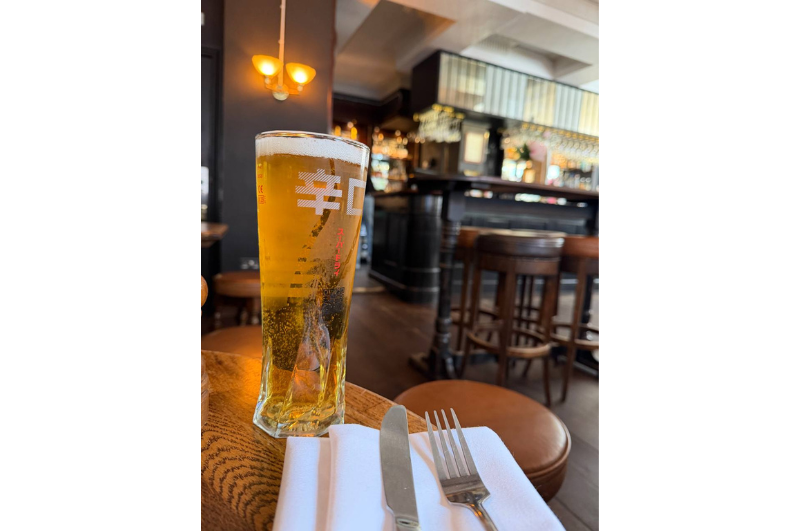
Here are 5 practical ways sales reps can actively help bars, pubs, and restaurants drive footfall through marketing—not theory, but what works on the ground in the UK on-trade:
1. Create Ready-to-Run Activation Ideas
Don’t just sell the product—bring a plug-and-play idea that the venue can execute immediately.
Think:
- “Gin & Tonic Week”
- “2-Cocktail Feature Menu”
- “Wine by the Glass Spotlight”
Most venues don’t have time to plan marketing.
If you bring the idea + structure, you become valuable instantly.
2. Provide Simple Marketing Assets
Venues struggle with content and design.
Reps can support with:
- Menu inserts
- Table talkers
- Social media creatives
- Short product descriptions staff can use
Make it easy for the venue to promote your product without extra effort.
3. Co-Promote the Venue Through Your Channels
This is massively underused.
Reps/brands can:
- Feature the venue on Instagram
- Tag them in posts
- Add them to “Where to Find Us” content
- Drive their audience to that venue
You’re not just selling to the venue—you’re sending customers to it.
4. Help Build Staff Selling Moments
Footfall doesn’t convert without staff push.
Reps can:
- Train staff in 10–15 minutes (quick, practical)
- Give them 1–2 strong lines to recommend the product
- Create “hero serves” that are easy to sell
Marketing brings people in. Staff converts them.
5. Turn Slow Days Into Traffic Days
The biggest opportunity in UK venues right now = midweek.
Reps should help create:
- Tasting nights
- Brand-led events
- Industry nights
- Limited-time offers
If you help fill a Tuesday, you become more than a supplier—you become a growth partner.
Another notable shift is the need to create urgency. In a more cautious market, decisions are often delayed. Buyers wait, reassess, and postpone changes to their lists. This means that suppliers need to do more than present a good product—they need to give buyers a reason to act now. Whether through seasonal relevance, activation ideas, or a clear commercial advantage, the ability to prompt action has become a critical part of the sales process.
Perhaps the biggest misunderstanding, however, lies in what constitutes success. Too many brands still celebrate the first order as a win, when in reality, the first order proves very little. For the venue, the real measure is whether the product reorders—whether it has sold through, engaged customers, and justified its place. Suppliers who remain involved after the listing, who monitor performance and help address slow movement, are far more likely to build long-term relationships than those who move on to the next account.
At the same time, there is a growing need for selectivity. With fewer venues and more competition for space, the idea of “more accounts equals more growth” is becoming less effective. Brands are increasingly seeing better results by focusing on the right accounts—venues where the pricing, customer profile, and overall positioning align with the product. In this environment, one well-chosen placement can deliver more value than multiple poorly aligned ones.
All of these point to a broader shift in how the UK on-trade functions. It is no longer a passive channel where products move simply because they are available. It has become an active, performance-driven environment where every SKU must earn its place continuously. Distribution alone is no longer a guarantee of sales, and visibility alone is no longer enough to drive demand.
For brands willing to adapt, this presents a different kind of opportunity. The playing field is no longer defined purely by scale or legacy—it is defined by execution. Those who understand the realities of the venue, who think beyond the initial listing, and who take responsibility for creating demand will find that they can still build strong, sustainable positions in the market.
In the end, selling to bars, pubs, and restaurants in the UK has not become impossible. It has simply become more honest.
You are no longer selling a product into a system that will take care of the rest.
You are selling a reason for that product to succeed.
Header Image Source: Joyce Romero on Unsplash
Also Read:
How to Merchandise your Bar to maximise sales
How to boost your happy hour sales
It's all about you - why you should be personalising the customer experience
TAGS: