The On Trade
21/04/2026 The bars and restaurants winning today are not the busiest, but the ones turning every guest into more value, more experience, and more return visits.
There’s a moment most operators recognise now.
It’s 7:30 pm.
The lights are right. The music is right. The team is ready.
But the room isn’t full.
A few years ago, that same night might have meant a waitlist at the door, two-deep at the bar, and a floor team trying to keep up with the pace. Today, in many cities, that rhythm has softened. Not collapsed—but undeniably changed.
Across bars and restaurants, footfall is no longer something you can rely on. It fluctuates. It hesitates. It demands more intention.
And perhaps most importantly, it no longer behaves the way the industry was built to expect.
The Shift No One Can Ignore
The narrative is often simplified to economics, and certainly, cost pressures have played their part. But what’s happening in bars and restaurants runs deeper than a single cycle.
Consumers haven’t stopped going out.
They’ve just become more deliberate about when, where, and why.
The spontaneous midweek dinner has become an occasional plan. The second round at the bar is no longer automatic. The “let’s see where the night goes” mindset has been replaced, in many cases, with something more measured.
For operators, this creates a subtle but profound tension.
Because the traditional model of the on-trade—particularly for bars—has always depended on momentum. On flow. On the natural build of a room over the course of an evening.
When that flow becomes unpredictable, everything else becomes harder.
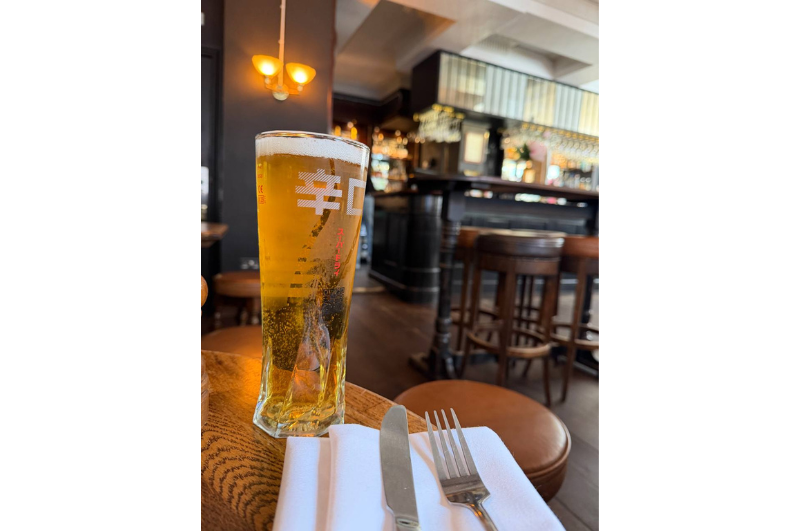
Lunches and day drinking—once driven by meetings and casual drop-ins—have sharply declined across UK venues, leaving a visible gap in daytime trade. The real challenge now is how bars, pubs, and restaurants can rethink their model to create new reasons to visit and rebuild footfall in a more intentional, experience-led way.
Fewer Guests, Higher Expectations
What remains, however, is not a lack of demand—but a redefinition of it.
When guests do walk in, they expect more clarity, more value, more experience. Not necessarily more complexity—but more intention.
This is where the divide is beginning to show.
Some venues are feeling the slowdown more acutely, waiting for footfall to recover to familiar patterns. Others are quietly adapting, reshaping their approach to match the new behaviour in front of them.
The difference isn’t always visible from the outside.
But it shows up clearly on the numbers.
The Rise of Revenue Thinking
Speak to operators who are holding their ground—or even growing—and a common theme emerges.
They are no longer building their strategy around how many people walk in.
They are building it around what happens once they do.
- Revenue per guest.
- Revenue per table.
- Revenue per hour.
These are not new concepts. But they are being applied with a level of focus that feels newly urgent.
Menus are being reconsidered—not just in terms of offer, but in terms of how they guide decisions. Cocktail lists are being tightened. Wine programs are being shaped to encourage progression, not just selection.
In the best-run rooms, the guest experience feels seamless. But underneath it, there is a clear commercial structure.
Service Is Becoming Strategic Again
Perhaps the most notable shift is happening on the floor.
For a long time, in busy markets, service could afford to be reactive. Orders would come. The room would carry itself.
That is no longer enough.
Today’s high-performing teams are more intentional. Not pushy—but present. Not scripted—but aware of the role they play in shaping the guest journey.
The difference can be small, but it’s significant.
- A well-timed recommendation.
- A confident suggestion for a second drink.
- A pairing that feels considered rather than convenient.
These moments, repeated across a service, add up.
In quieter rooms, they are often the difference between a table that settles at one round and one that continues.
Giving People a Reason to Come Out
At the same time, operators are becoming more deliberate about why guests should choose them on any given day.
The idea that a bar or restaurant simply needs to be open—and well-located—is increasingly outdated.
Instead, there is a shift towards creating occasions.
Not in a forced or overly programmed way, but through a clearer sense of identity and purpose.
It might be a midweek wine format that offers discovery without intimidation. A cocktail list that tells a story. A food menu that feels timely and relevant.
Or simply a consistent promise: that when you walk in, something about the experience will feel worth leaving home for.
The Quiet Power of Regulars
In this environment, the role of the regular guest has become more important than ever.
Not as a romantic ideal, but as a commercial reality.
- Regulars bring stability.
- They smooth out volatility.
- They create a baseline that unpredictable footfall cannot.
The venues that are performing well are not leaving this to chance.
They recognise their returning guests. They engage with them. They build familiarity—not just through memory, but through systems, communication, and attention.
In a market where new footfall is harder to predict, repeat business becomes a form of resilience.
Experience Over Discounting
One of the more encouraging developments is a growing reluctance, among stronger operators, to rely on discounting as a primary lever.
Price-led tactics still exist, of course. But there is a recognition that they rarely build long-term value.
Instead, the focus is shifting towards experience.
Not extravagance—but distinctiveness.
A sense that what is being offered cannot be easily replicated at home. That the combination of product, service, and setting creates something that feels justified—even in a more cautious spending environment.
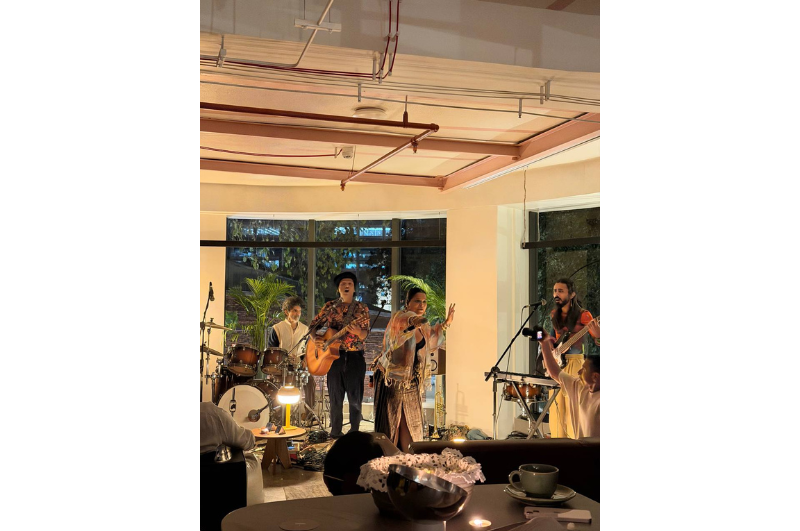
A lot of venues are offering music micro events, and that is not only driving footfalls but creating a new channel of ticket sales using the venue's real estate.
A Different Kind of Opportunity
It would be easy to frame the current moment purely as a challenge.
And for many, it is.
But it is also creating a different kind of competitive landscape.
One where success is less dependent on sheer volume and more on clarity of execution. Where smaller, sharper operations can outperform larger, less focused ones. Where attention to detail is rewarded more consistently.
In that sense, the quieter room at 7:30 pm is not just a sign of decline.
It is a signal.
A reminder that the rules have shifted—and that those willing to adjust can still build strong, profitable businesses within them.
The New Measure of Success
In the end, the industry may need to rethink one of its most ingrained assumptions.
That a full room is the only indicator of a healthy business.
Because increasingly, the venues that are navigating this period best are not always the busiest.
- They are the ones who understand their guests more clearly.
- Those who manage their floors more intentionally.
- That treats every visit as an opportunity—not just a transaction.
And that, perhaps, is where the future of bars and restaurants is being quietly reshaped.
Also Read:
Michele Orbolato On Crafting Profitable Wine Programs Across Los Mochis Locations
Building Community Through Wine: Inside the Success of the Gleneagles Townhouse Wine Club
The Economics Of Sustainability
TAGS: