The On Trade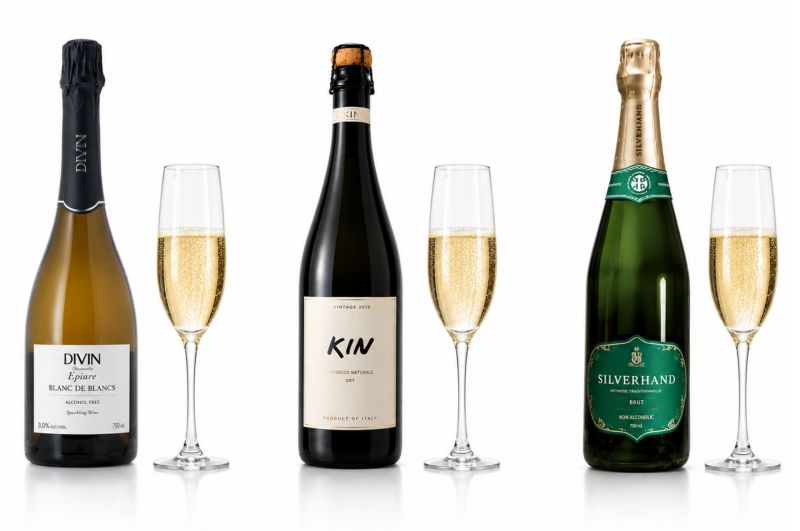
24/06/2026 At a time when much of the global wine industry is grappling with declining consumption and shifting consumer habits, sparkling wine continues to move in the opposite direction.
According to a new Sparkling Report released by ProWein, the category remains one of the strongest performers in the wine business, with premiumization, new production regions, and alcohol-free innovation helping to drive growth. The report estimates the global sparkling wine market will reach approximately $54.7 billion, underlining its importance as one of the industry's most resilient and dynamic segments.
For importers, distributors, retailers, and hospitality operators, the report offers a useful snapshot of where consumer demand is heading and where future opportunities are likely to emerge.
Sparkling Wine Is No Longer Reserved For Special Occasions
One of the clearest themes running through the report is the changing role of sparkling wine in everyday consumption.
Historically associated with celebrations and milestone moments, sparkling wine is increasingly finding a place in more casual settings. Consumers are ordering it as an aperitif, pairing it with meals, choosing it by the glass, and incorporating it into a wider range of social occasions. As a result, sparkling wine is becoming less dependent on traditional celebrations and more integrated into everyday drinking culture.
That shift matters for bars, restaurants, and hotels. It opens the door to broader sparkling wine programs and creates opportunities to feature the category across different dayparts and occasions rather than confining it to festive moments alone.
Consumers Continue To Trade Up
The report also highlights the ongoing strength of premiumization across the sparkling category.
Consumers are showing a growing preference for wines that offer authenticity, provenance, and a clear sense of place. Champagne continues to hold its position at the top end of the market, but other categories are gaining momentum. Prosecco remains the dominant force globally, while Crémant is experiencing notable growth as consumers seek quality alternatives that still offer value.
More broadly, there is increasing demand for sparkling wines that communicate something distinctive about their origin, production methods, and craftsmanship. Buyers are paying closer attention to these stories, and consumers appear willing to pay more for products that deliver them.
New Sparkling Wine Regions Are Earning Their Place
While the traditional sparkling wine regions remain influential, the report points to growing recognition for a number of newer producing regions.
England, Tasmania, California, and Hungary are among those gaining attention as producers continue to refine their styles and establish stronger identities in the marketplace. Their success reflects a broader trend within wine, where consumers are becoming more willing to explore beyond established names and regions.
English sparkling wine, in particular, continues to build momentum internationally. Investment, improved vineyard practices, and favorable growing conditions have all contributed to a category that is now earning serious attention from buyers and consumers alike.
Interestingly, these developments are already showing up in competition results judged by trade professionals.
At the 2026 London Wine Competition, several of the highest-scoring sparkling wines came from regions and categories highlighted in the ProWein report. Kin Sparkling White from Kinsbrook Vineyard received 96 points, a Double Gold Medal, and was named Wine of the Year United Kingdom.
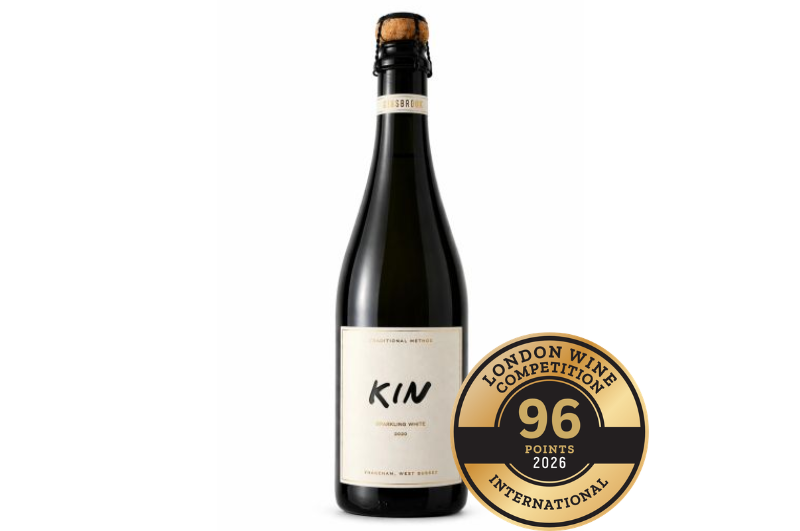
Kin Sparkling White wins best wine from the UK as well as the London Wine Competition
Another wine reflecting the growing strength of emerging sparkling wine regions is Silverhand Estate's Blanc de Blancs 2018 from the United Kingdom. Produced exclusively from Chardonnay, the wine earned 96 points and a Double Gold Medal at the 2026 London Wine Competition, further reinforcing the reputation of English sparkling wine among trade buyers and industry professionals.
The wine impressed judges with its bright, complex character, combining honeyed and nutty aromas with crisp apple and pear flavours, lively acidity, and a creamy, finely integrated mousse. Its clean, refreshing finish showcases the quality and sophistication increasingly associated with England's leading sparkling wine producers and highlights why the country's sparkling wine sector continues to gain international recognition.
One wine that perfectly illustrates this shift is Divin Vigneron Chenin Sparkling Blanc de Blancs 0.5% from France.
The alcohol-free sparkling wine achieved an impressive 97 points at the 2026 London Wine Competition, earning a Double Gold Medal while also being named Non-Alcoholic Wine of the Year and Wine of the Year France.
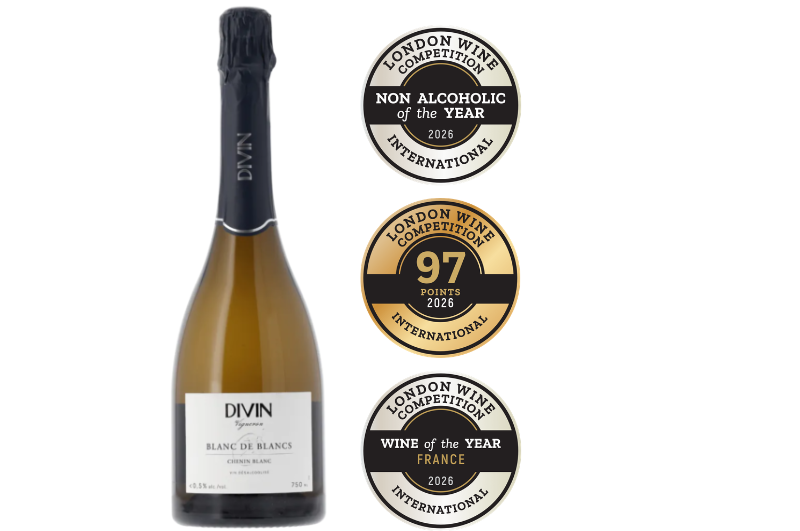
Divin Vigneron Chenin Sparkling Blanc de Blancs 0.5% from France also won the top wine from France at 2026 London Wine Competition
Made from Chenin Blanc, the wine impressed judges with its vibrant, bone-dry profile, offering aromas of citrus, nectarine, quince, and jasmine alongside searing acidity, remarkable freshness, and a long, food-friendly finish. Its success highlights how far the alcohol-free category has evolved, with premium no-alcohol wines now delivering the structure, complexity, and sense of place traditionally associated with top-performing conventional wines.
Those results are part of a wider pattern. Emerging sparkling wine regions are no longer competing for attention; increasingly, they are competing for top honors.
Alcohol-Free Sparkling Wine Continues To Gain Ground
If there is one area generating particular momentum, it is alcohol-free sparkling wine.
What was once viewed as a niche category is becoming an increasingly important part of the wider wine conversation. The report notes that more than 22 million bottles of alcohol-free sparkling wine were recently sold in Germany alone, with analysts expecting continued double-digit growth in the years ahead.
Consumer attitudes toward moderation have evolved significantly, and hospitality operators are responding by expanding their premium non-alcoholic offerings. Sparkling wine is playing an important role in that shift because it preserves many of the rituals and social cues traditionally associated with wine service.
Quality is improving as well.
At the 2026 London Wine Competition, Divin Vigneron Chenin Sparkling Blanc de Blancs 0.5% achieved 97 points, earned a Double Gold Medal, and was named Non-Alcoholic Wine of the Year. Its success reflects how far the category has come. These wines are increasingly being evaluated alongside traditional products and, in many cases, competing successfully on quality rather than simply serving as alternatives.
That is hardly accidental.
The same trends identified throughout the ProWein report—premiumization, the rise of new sparkling wine regions, and innovation in alcohol-free products—are also visible in the wines receiving recognition from buyers, importers, distributors, retailers, and hospitality professionals.
[[relatedPurchasesItems-68]]
What It Means For The Trade
For beverage directors, wine buyers, importers, and operators, the takeaway is fairly straightforward: sparkling wine remains one of the most promising categories in the wine business.
Whether through premium Prosecco, fast-growing Crémant, English sparkling wine, terroir-driven producers, or alcohol-free alternatives, consumers continue to engage with the category in ways that create opportunities throughout the supply chain.
As drinking occasions evolve and consumer expectations shift, the wines finding success are increasingly those that combine quality, authenticity, strong positioning, and relevance to modern lifestyles. If the latest market data is any indication, sparkling wine's growth story is far from over.
Also read:
More Feedback and Transparency For Entrants At London Competitions
How London Wine Competition Winners Drive DTC Sales and Wine Club Growth
TAGS: