The On Trade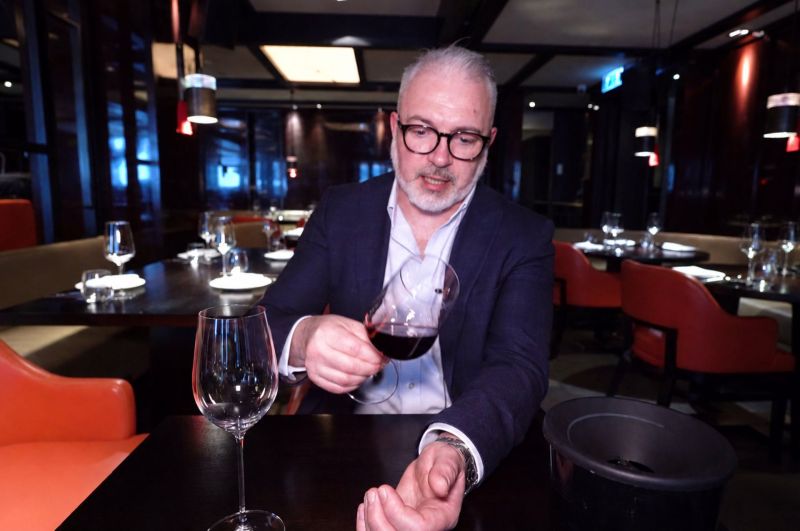
25/08/2026 The UK Sommelier of the Year and Master Sommelier shares the discipline behind the qualification, the importance of tasting with purpose and why hospitality—not knowledge alone—remains the foundation of the profession.
The Master Sommelier badge is one of the most respected qualifications in hospitality. It signals exceptional wine knowledge, disciplined blind-tasting ability and a highly developed standard of restaurant service. Yet the title can sometimes obscure the reality behind it: years of working the floor, studying around demanding shifts, tasting methodically, learning from mistakes and continuing after setbacks.
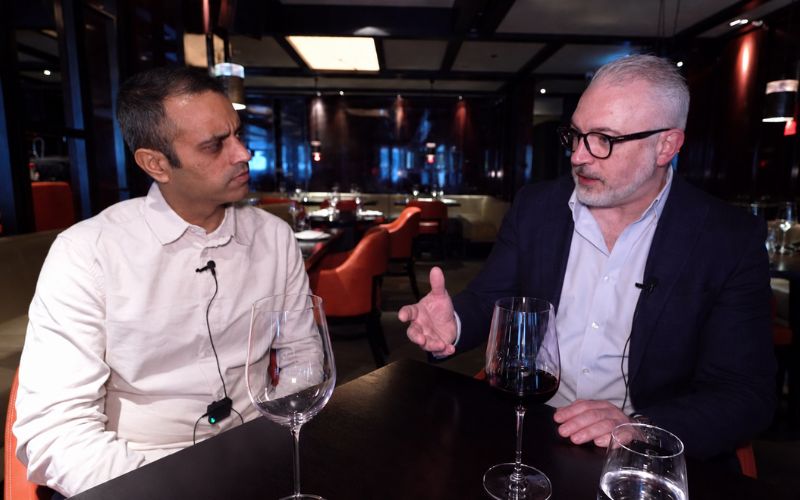
London Compettions and Beverage Trade Network CEO Sid Patel sat down with Christopher Delalonde MS to explore what it genuinely takes to reach that level. Delalonde was Head of Wine at Hakkasan London when the conversation was recorded. His wider career has included leading wine programs at some of London’s best-known hospitality businesses, being named UK Sommelier of the Year in 2010 and earning the Master Sommelier title in 2019. In 2026, he announced a new position as Head Sommelier at The Pembroke Club London.
His story is useful not only for candidates preparing for Court of Master Sommeliers examinations, but for any wine professional trying to become more accurate, confident and commercially effective.
The Journey Starts With Curiosity, Not a Title
Delalonde did not begin his career with a grand plan to become a Master Sommelier. His relationship with wine developed through hospitality: working in restaurants, meeting influential professionals, tasting widely and discovering how much there was to learn.
That matters because the strongest candidates are not motivated by the badge alone. The study required is too broad and the process too demanding for status to sustain someone over the long term. Progress comes from curiosity—the desire to understand why a wine tastes as it does, how a region shapes style, why one bottle works with a dish and how to communicate that information to a guest.
An aspiring Master Sommelier therefore needs to ask an early question: do I enjoy the daily work of learning, tasting and serving, or am I attracted mainly to the final qualification? The first motivation can grow into a career. The second is unlikely to survive the difficult periods.
Understanding the Four-Stage CMS Pathway
The Court of Master Sommeliers Europe currently organizes its qualification pathway across four progressive levels:
1. Introductory Sommelier Certificate
2. Certified Sommelier Certificate
3. Advanced Sommelier Certificate
4. Master Sommelier Diploma
Each stage builds on the previous one. The early levels establish foundations in wine theory, tasting, food pairing, spirits and service. The Advanced level requires candidates to demonstrate substantially deeper knowledge and professional competence. Only candidates who have passed the Advanced Sommelier Certificate may enter the Master Sommelier Diploma examination.
The Master Sommelier Diploma assesses three disciplines: theory, practical tasting and practical service. The pass mark is 75% in each section. Candidates who pass one or two sections may retain those results subject to the Court’s current examination and resit rules, but all three components must ultimately be passed within the prescribed period.
The structure reveals an important truth: this is not simply a wine-knowledge examination. It assesses the complete sommelier—what the candidate knows, what they perceive in the glass and how they perform for a guest.
Theory Requires a System, Not Random Reading
The theoretical scope can appear almost limitless. Candidates are expected to understand regions, appellations, grape varieties, climate, soils, viticulture, winemaking, classifications, producers, vintages, spirits, other beverages and the commercial realities of restaurant service.
Trying to “know everything” is not a useful study plan. Successful preparation requires structure.
Candidates should divide the world into manageable sections and create a repeatable framework for each region:
- Geography and climate
- Key grapes and permitted varieties
- Appellations and classifications
- Viticultural conditions
- Winemaking traditions and contemporary practices
- Leading producers and benchmark wines
- Important vintages
- Typical styles, quality levels and market positioning
- Food-pairing and service implications
Active recall is more effective than repeatedly reading the same material. Maps should be drawn from memory. Study partners should question one another aloud. Producers, appellations and regulations should be connected to actual wines whenever possible.
Delalonde’s experience also reinforces the value of learning from senior professionals. A mentor can identify gaps that a candidate does not yet recognize, explain the standard expected in an examination and help turn raw knowledge into concise, confident answers.
Blind Tasting Is Structured Deduction
Blind tasting is often portrayed as a performance in which gifted tasters identify a wine through instinct. In reality, professional blind tasting is a disciplined process of observation, interpretation and elimination.
The taster is not merely trying to guess the label. They are building and defending a conclusion from evidence in the glass.
That process begins with sight. Color, depth, hue, viscosity, brightness and development provide initial clues. The nose then adds evidence through fruit character, floral notes, herbs, spices, oak, earth, mineral impressions and signs of age or winemaking. The palate tests and refines the hypothesis through sweetness, acidity, tannin, alcohol, body, flavor intensity, texture and finish.
A useful sequence is:
1. Observe before interpreting.
2. Describe what is present without forcing a conclusion.
3. Connect structural and aromatic evidence to possible grapes, climates and regions.
4. Eliminate alternatives that conflict with the evidence.
5. State a clear final conclusion with confidence.
Consistency is more valuable than occasional brilliance. Candidates should use the same method and vocabulary every time so that their minds remain organized under pressure.
Taste With a Question in Mind
More tasting does not automatically create a better taster. Improvement depends on the quality of attention.
Every practice wine should have a purpose. A candidate might compare cool- and warm-climate expressions of the same variety, distinguish different oak regimes or examine how bottle age changes structure and aroma. Comparative flights are particularly effective because they make differences easier to recognize and remember.
Useful practice questions include:
- What evidence suggests climate?
- Is the fruit profile more consistent with variety, ripeness or winemaking?
- How are acidity, alcohol, tannin and body working together?
- Is oak present, and if so, what role does it play?
- Does the wine show development, and what kind?
- Which alternative conclusion is most plausible, and why is it less convincing?
Write down the call before revealing the bottle. Then compare the conclusion with the wine and identify precisely where the reasoning succeeded or failed. “I got it wrong” teaches very little. “I underestimated the acidity and mistook American oak character for bottle development” creates a useful lesson.
Build a Tasting Group That Challenges You
Serious candidates rarely prepare alone. A disciplined tasting group gives access to more wines, diverse perspectives and the pressure of presenting conclusions aloud.
The strongest groups are not casual gatherings. They meet regularly, taste under timed conditions, use a consistent grid and provide direct but constructive feedback. Members should rotate responsibility for selecting wines and avoid creating flights that are either intentionally misleading or too easy to be useful.
Different palates notice different things. One person may be especially sensitive to acidity, another to oak or reduction. Listening to how colleagues reach a conclusion helps a candidate identify personal blind spots.
The group also provides psychological support. The route to the Master Sommelier Diploma can be isolating, especially when study is fitted around long restaurant hours. A reliable community makes the process more sustainable.
Service Is Where Knowledge Becomes Hospitality
The service examination is not theatre for its own sake. It tests whether a candidate can apply knowledge while remaining composed, commercially aware and focused on the guest.
Technical accuracy matters: opening and serving still and sparkling wines correctly, managing decanting, selecting appropriate glassware, maintaining cleanliness and navigating the table with confidence. Yet mechanics alone are insufficient.
The Master Sommelier standard also requires social intelligence, courtesy, sales ability and adaptability. Candidates may be questioned while performing service. They must listen carefully, respond directly and continue looking after the table rather than becoming absorbed by their own knowledge.
This reflects Delalonde’s broader philosophy of the sommelier’s role. A sommelier is part of the hospitality team, not a separate authority operating above it. The objective is not to impress the guest with facts. It is to make the guest feel understood and to improve their experience.
Learn to Sell Without Making the Guest Feel Sold To
Commercial ability is explicitly part of the Master Sommelier standard. That does not mean pushing the most expensive bottle. It means understanding the guest’s preferences, occasion and budget, then making a recommendation that builds trust and contributes responsibly to the business.
Good wine sales begin with better questions:
- What styles do you normally enjoy?
- Is there a dish or menu direction you want the wine to follow?
- Would you prefer something familiar or something new?
- Is there a price range you would like me to work within?
The sommelier should then offer a clear recommendation in accessible language. Technical detail can be added when the guest wants it, but expertise is most valuable when it simplifies a decision.
For examination candidates, this means practicing sales language as carefully as service mechanics. Recommendations should sound natural, specific and genuinely helpful.
Study While Remaining a Working Sommelier
The qualification is rooted in restaurant service, and the workplace provides essential training. Every shift offers opportunities to develop skills the examination is designed to test: prioritization, composure, memory, sales, problem-solving and communication.
Candidates can make their work more deliberate by setting small professional goals. One week might focus on improving Champagne service. Another might involve learning every sweet wine or fortified wine on the list. Pre-shift briefings can become short theory sessions, while quiet periods can be used to practice tableside language.
The danger is allowing study to undermine performance at work. Fatigue damages retention, tasting accuracy and wellbeing. Candidates need a realistic schedule that includes rest, physical health and time away from wine. Sustainable preparation is more powerful than short bursts of extreme effort.
Failure Must Become Information
Few candidates move through the entire pathway without disappointment. The level is exacting, and even talented professionals can fall short in one section.
Delalonde’s message is not to romanticize failure but to use it. A failed attempt should produce a more precise plan. Was the weakness knowledge depth, answer structure, tasting calibration, timing, service mechanics or composure? General frustration must be converted into a specific training objective.
Candidates should seek honest feedback, write a post-exam review while the experience is fresh and resist the temptation to change every part of their preparation at once. Improvement usually comes from identifying the most important weakness and addressing it systematically.
Persistence is not repeating the same approach. It is returning with a better one.
Humility Is a Professional Advantage
Wine rewards confidence but punishes certainty. There will always be another region, vintage, producer or style to learn. The deeper a professional goes, the clearer the limits of their knowledge become.
Humility makes a sommelier easier to teach, more useful to colleagues and more trustworthy with guests. It allows someone to say “I don’t know, but I will find out” rather than hiding behind jargon. It also protects the team culture around the candidate. Ambition should not make colleagues feel that their work is less important.
The badge represents achievement, but the qualities required to earn it—curiosity, service, discipline and openness—must continue after the examination.
A Practical Preparation Framework
For sommeliers considering the pathway, Delalonde’s experience can be distilled into a practical framework:
1. Build restaurant experience first
The CMS pathway is designed for beverage professionals working in hospitality. Floor experience develops the judgment and composure that books cannot provide.
2. Understand the standard at each level
Review the official syllabus, tasting grid, examination format and current rules before planning study. Do not prepare for an imagined version of the exam.
3. Create a weekly system
Divide time among theory, tasting and service. Avoid allowing the most enjoyable discipline to consume the entire schedule.
4. Find mentors and serious study partners
Seek people who will challenge weak reasoning, not simply confirm what you already know.
5. Practice under examination conditions
Timed tasting, verbal theory and interrupted service feel different from private study. Train the performance as well as the knowledge.
6. Record mistakes
Maintain a tasting log, theory-gap list and service checklist. Patterns become visible only when they are documented.
7. Protect physical and mental energy
Sleep, nutrition, exercise and recovery affect sensory performance and recall. They belong in the study plan.
8. Stay connected to hospitality
The qualification should make you a better professional for guests and colleagues—not only a better examination candidate.
The Badge Is the Result, Not the Purpose
Christopher Delalonde’s journey shows that becoming a Master Sommelier is not a single feat of memory or tasting talent. It is the result of sustained professional development across knowledge, sensory analysis, service and human interaction.
The candidate must study like a scholar, taste like an analyst and serve like a host. But the ultimate value of that work is not the ability to identify an obscure wine under pressure. It is the ability to make better decisions for guests, mentor the next generation and raise the standard of hospitality.
For aspiring sommeliers, that is both the challenge and the opportunity. The road is long, but every stage can make someone more useful on the floor—even before the letters “MS” ever appear after their name.
This article draws on Christopher Delalonde MS’s conversation with Sid Patel for Inside the Drinks Business. Delalonde’s Hakkasan position is referenced as his role at the time of filming.
Also Read:
Hakkasan's head of wine Christopher Delalonde MS on his "accidental" career and how a wine makes it onto his list
How Clement Robert MS creates an elite experience
What it really means to be a sommelier, with Vincenzo Arnese
TAGS: